Nike Free was engineered not to cushion the foot from the ground, but to liberate it. Inspired by Stanford athletes training barefoot, its flex-groove outsole was designed to unlock the biomechanical potential of the foot's 26 bones, 33 joints, 107 ligaments, and 19 muscles. It wasn't just a new shoe. It was a new philosophy: that the foot itself is an athlete's most neglected piece of equipment.
The challenge was to translate that science into a launch experience consumers could feel, not just read about.
As creative lead, I guided a team to develop "Be Footstrong," a speculative experiential concept that reframed the Nike Free as a lab experience, part sports-science exhibit, part immersive brand theater, positioning the consumer as a test subject within Nike's own innovation pipeline.
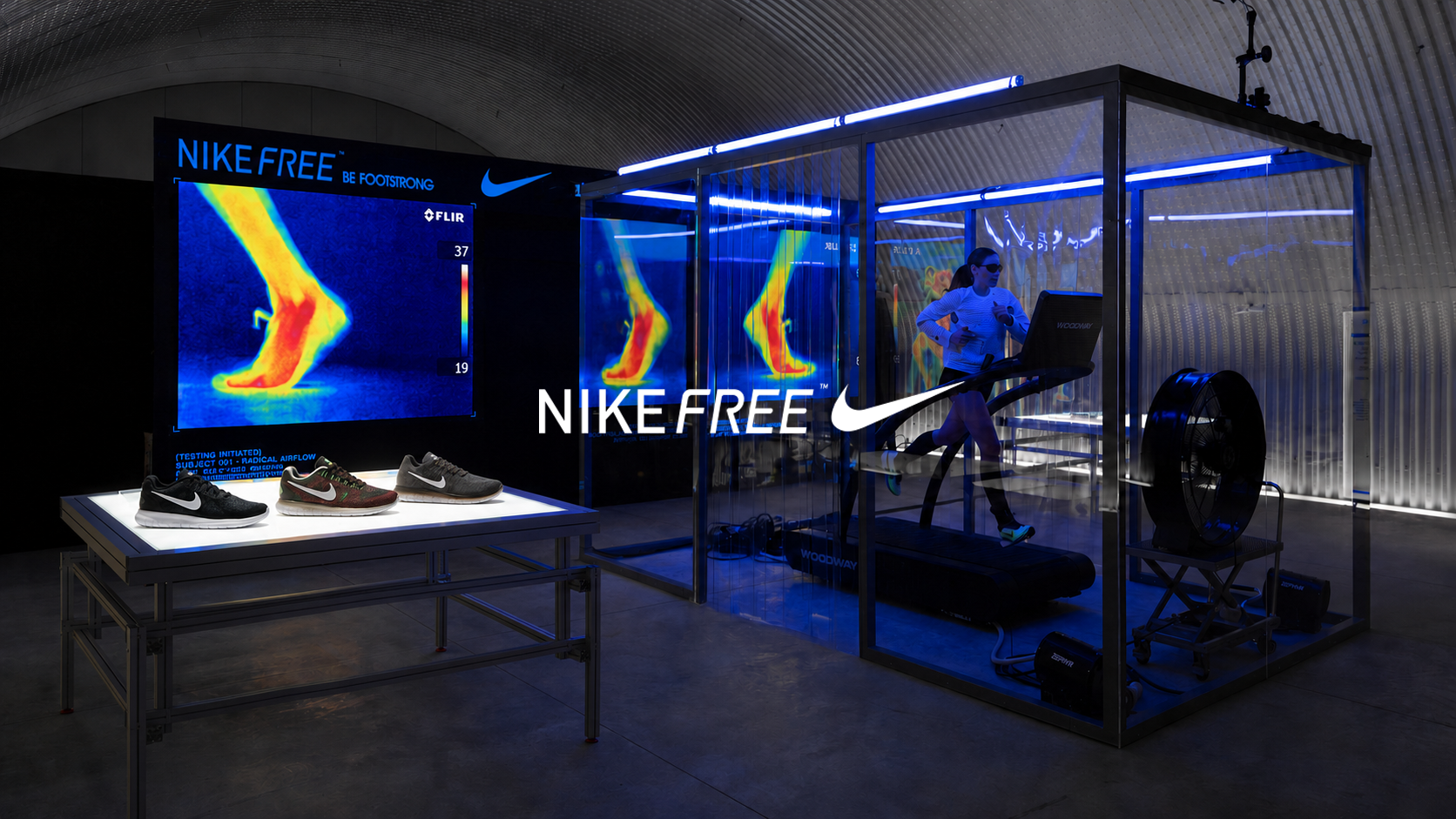
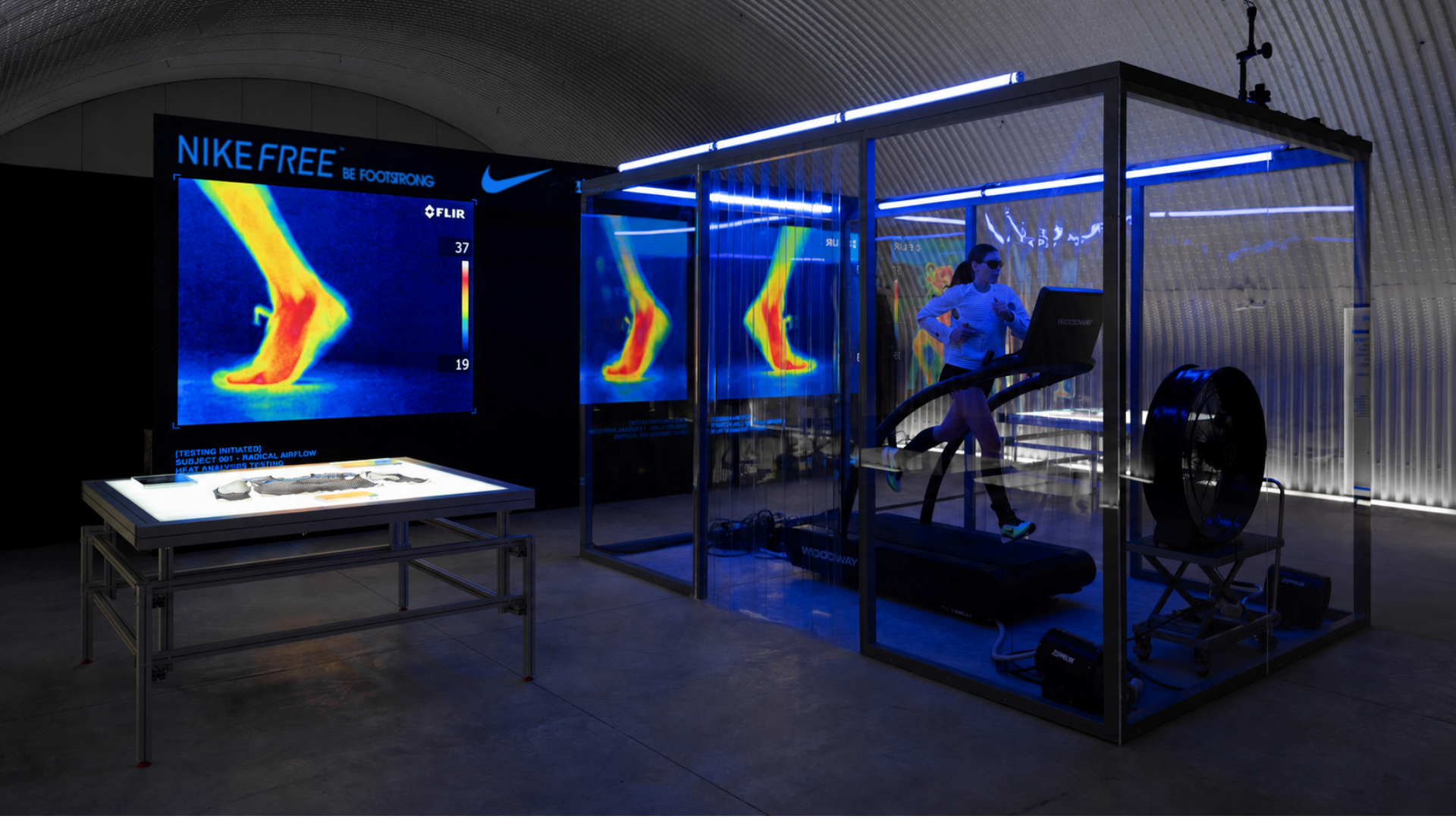
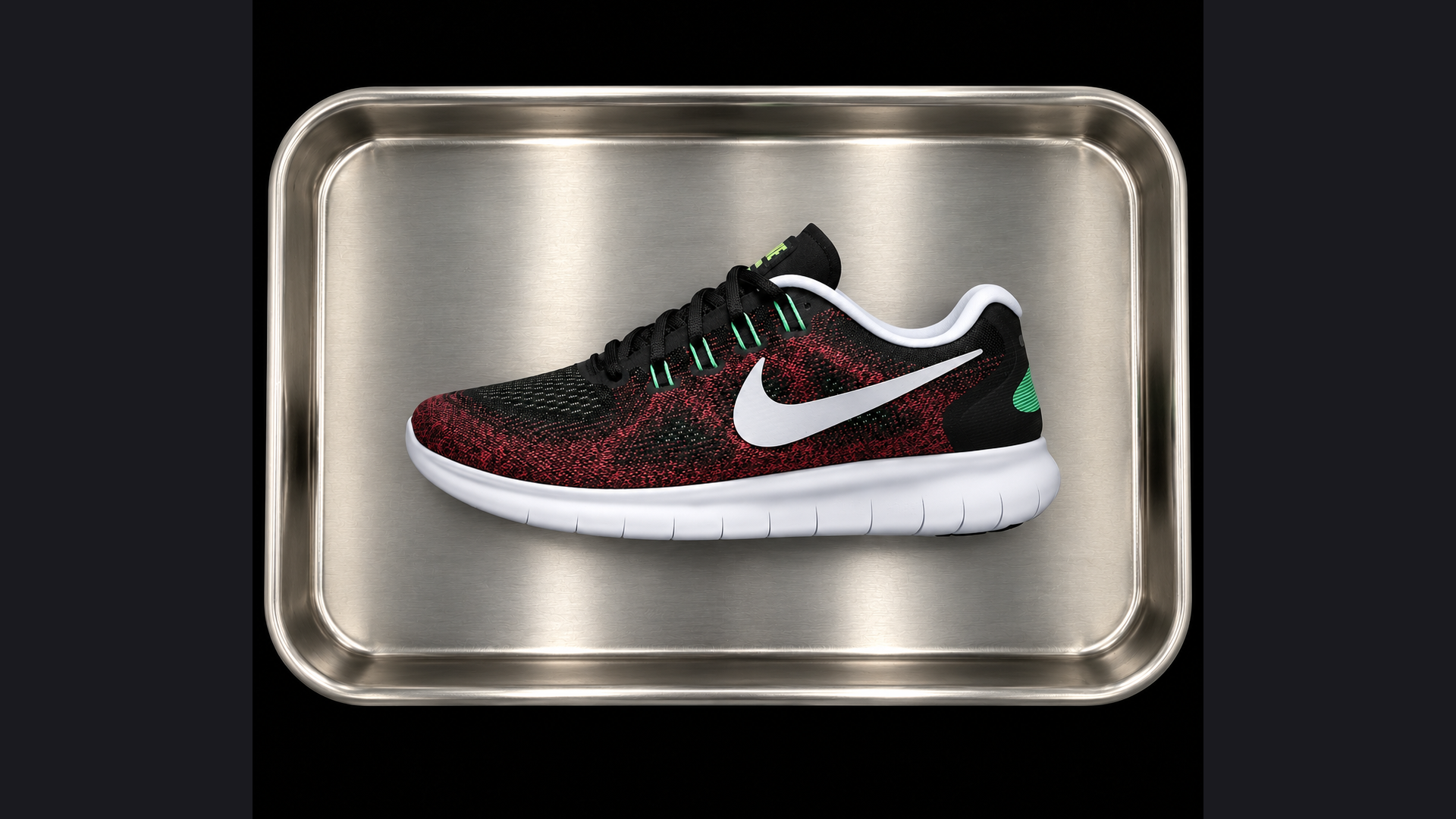
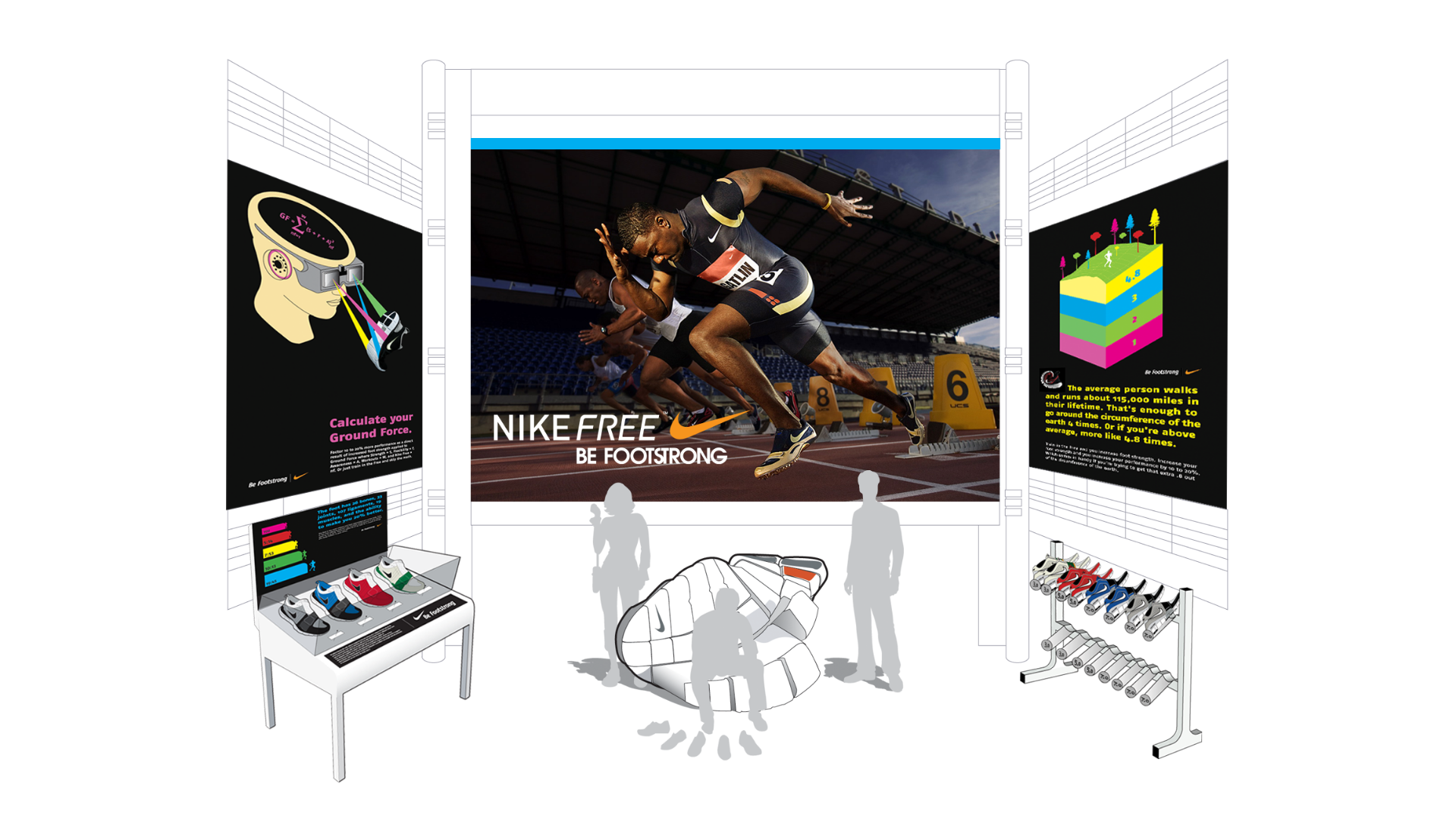
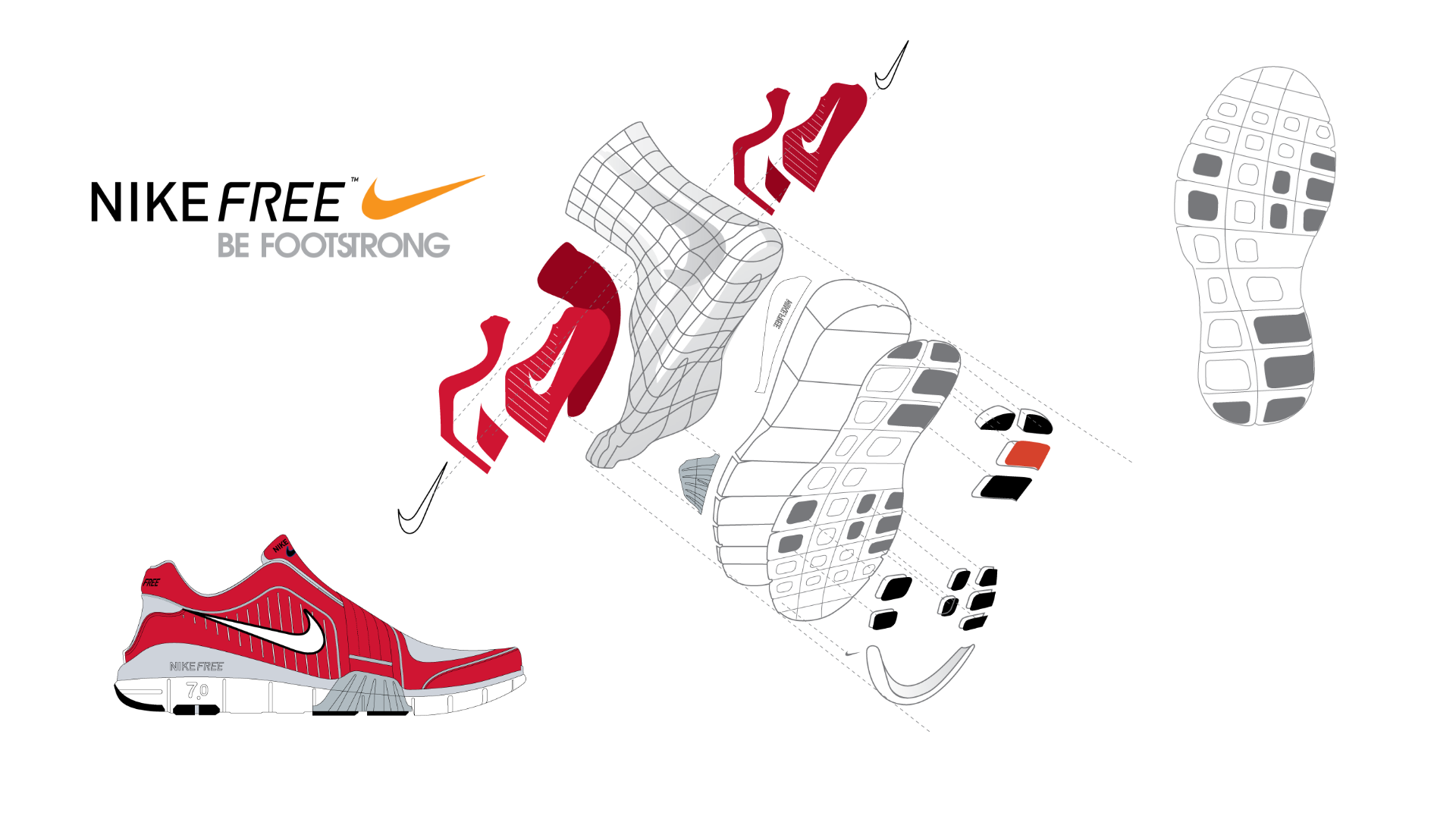
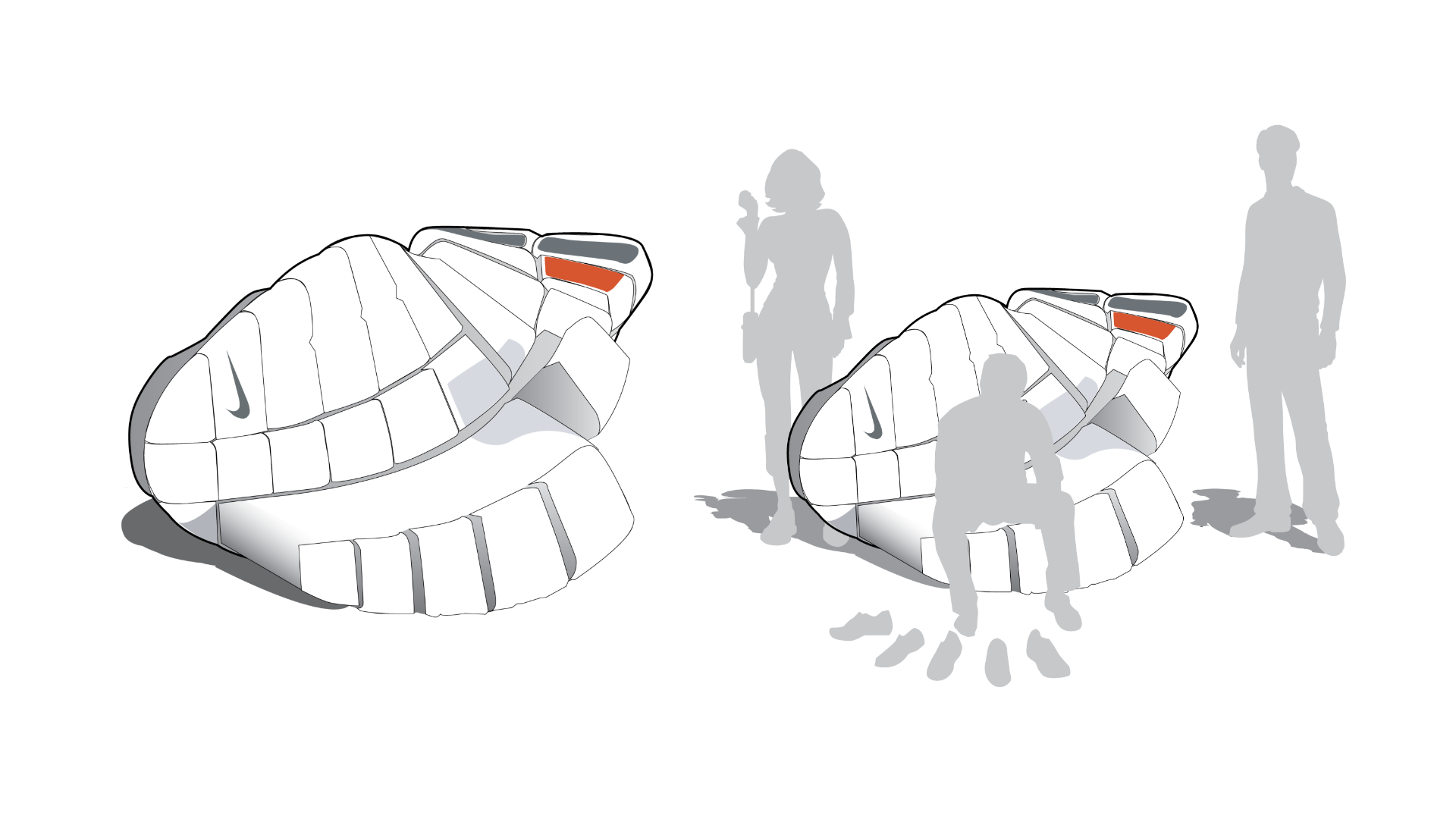
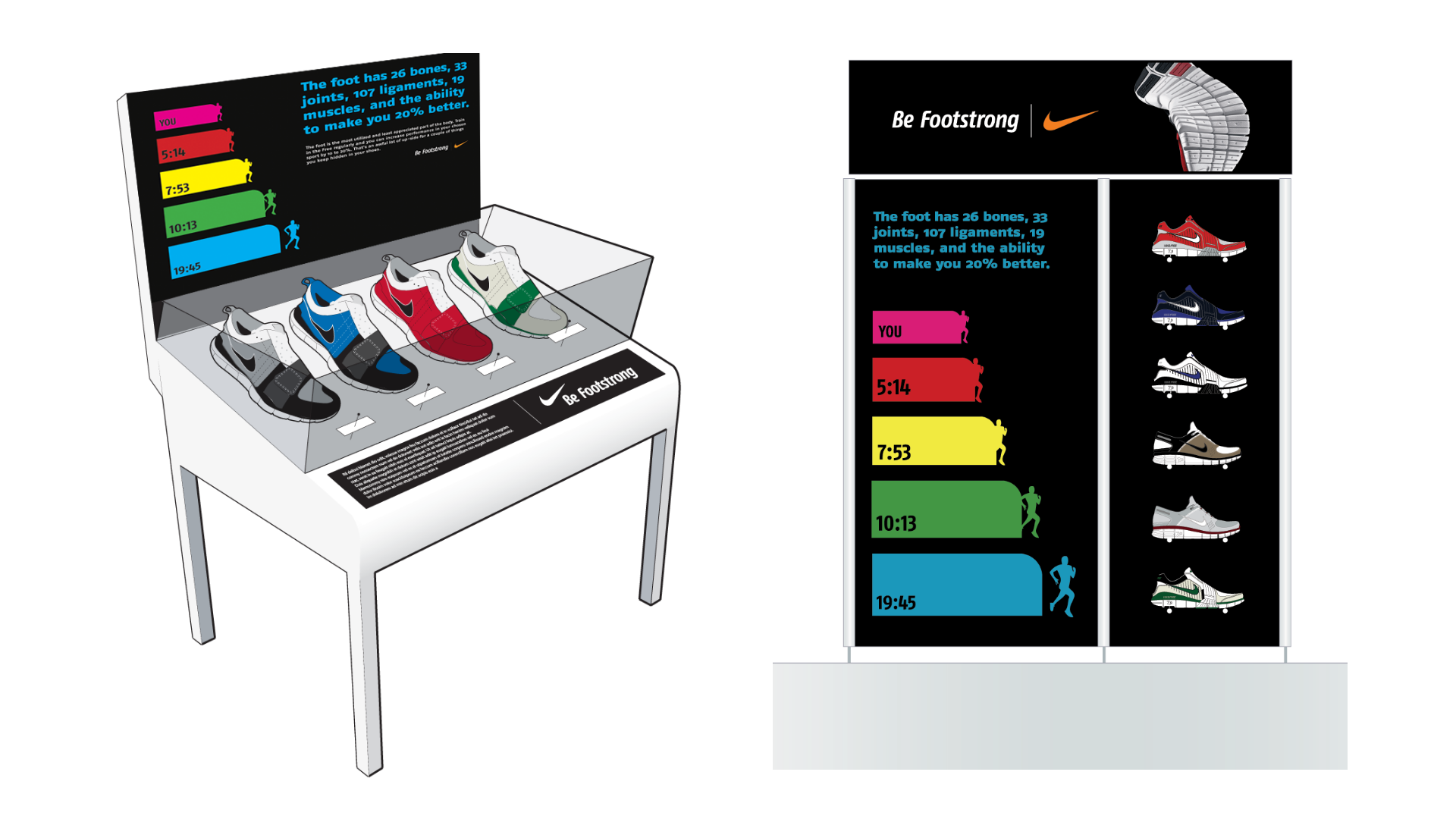
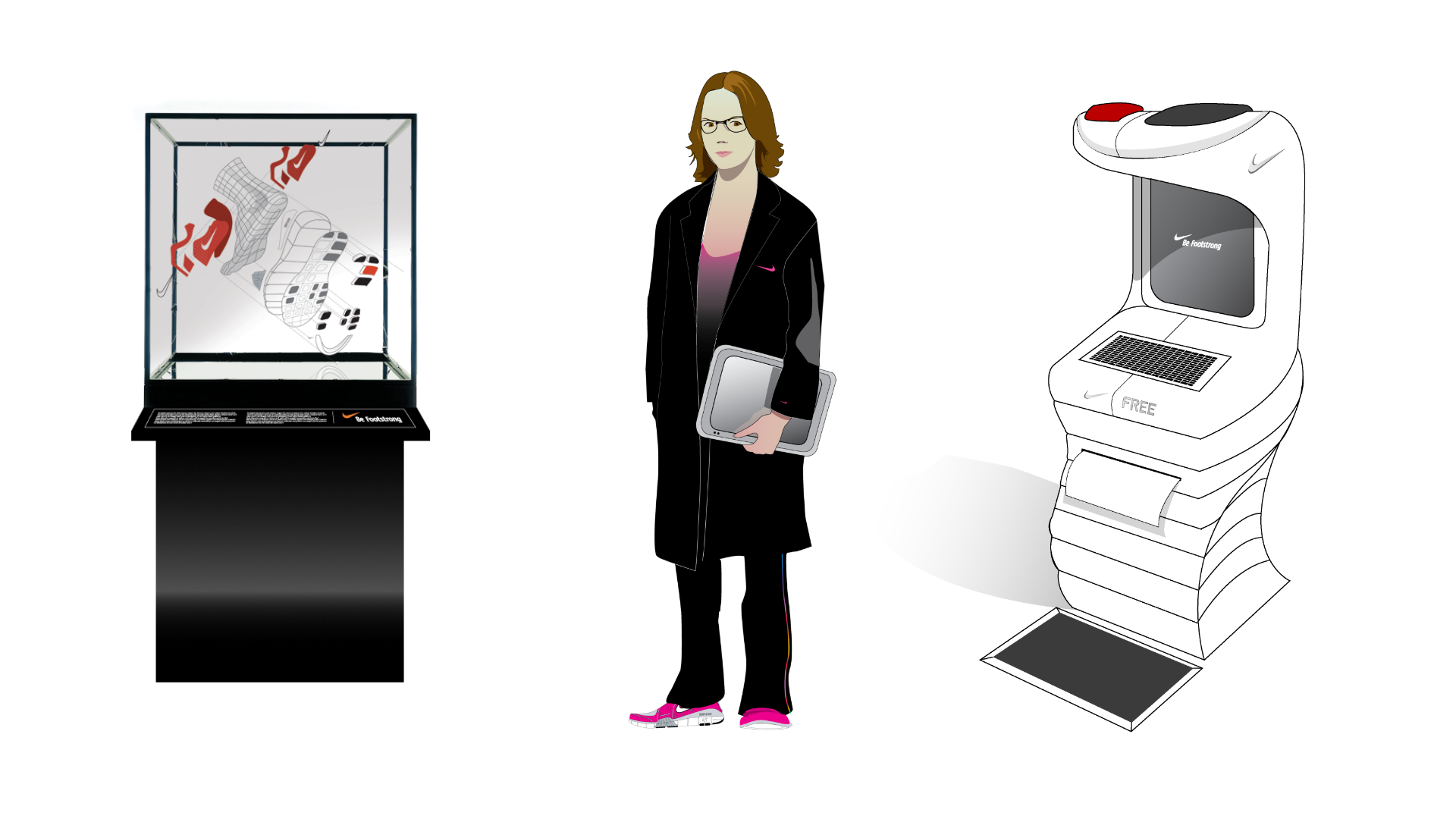
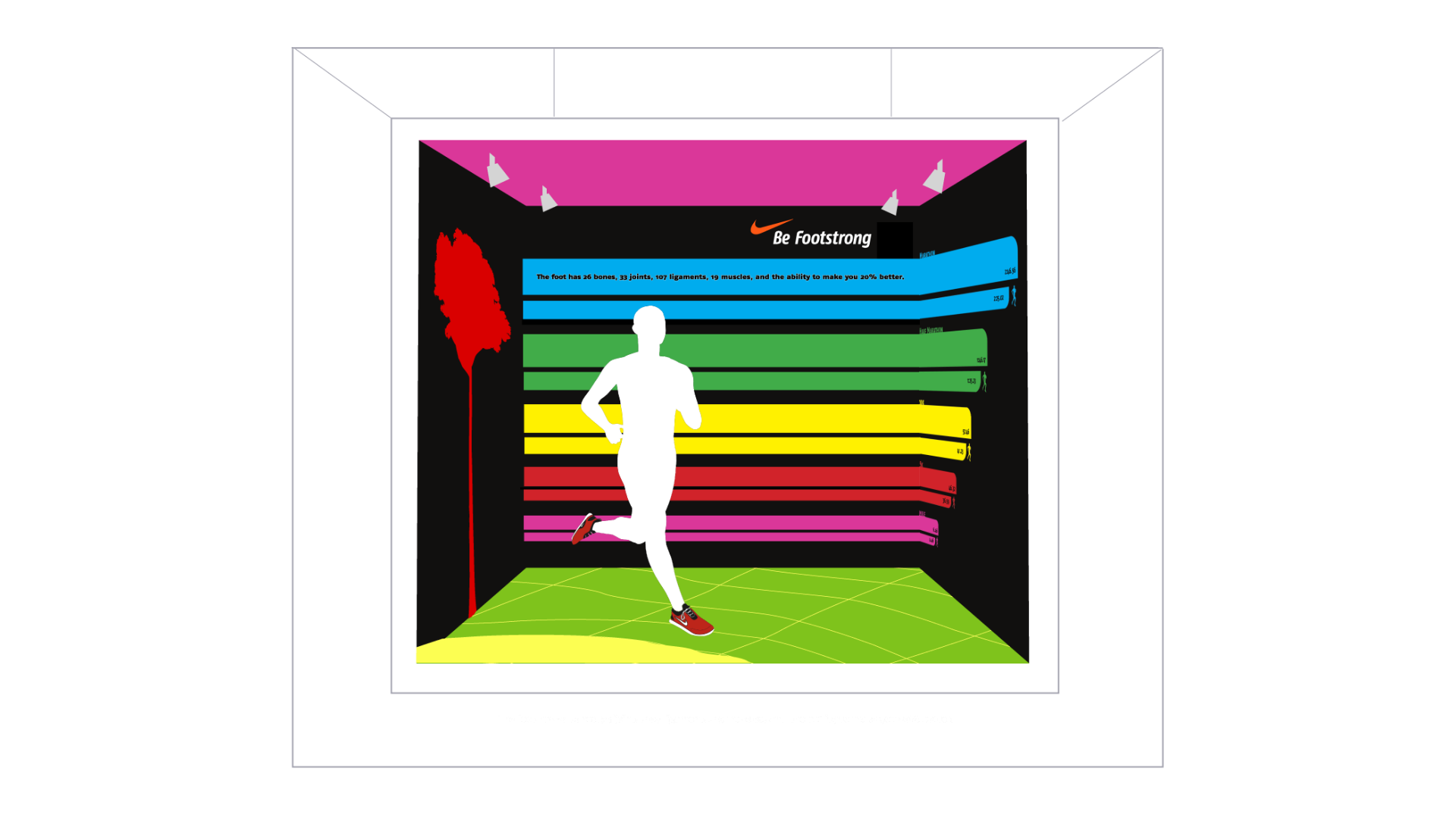
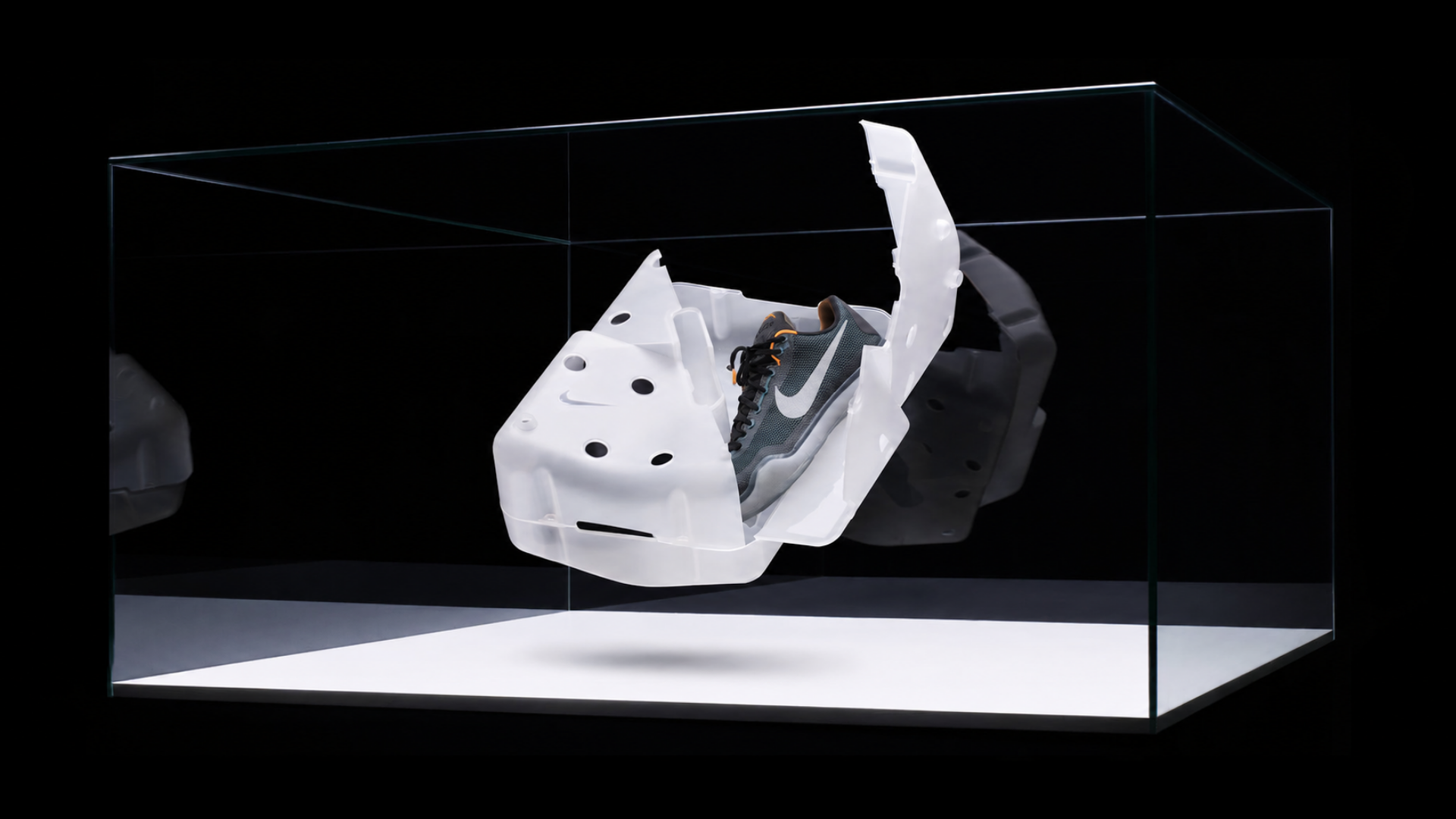
The concept spanned X-ray-style anatomical visualizations revealing the engineering behind the sole; interactive retail displays with color-coded pace benchmarking; an oversized sculptural shoe installation scaled to human proportions; a FLIR thermal imaging treadmill chamber mapping the foot in real-time motion; and holographic display cases deconstructing the shoe layer by layer.
The creative direction was rooted in one idea: make the invisible visible. The biomechanics that make Nike Free revolutionary happen beneath the surface. "Be Footstrong" was designed to surface all of it, turning the science of natural motion into a visceral, shareable brand moment.